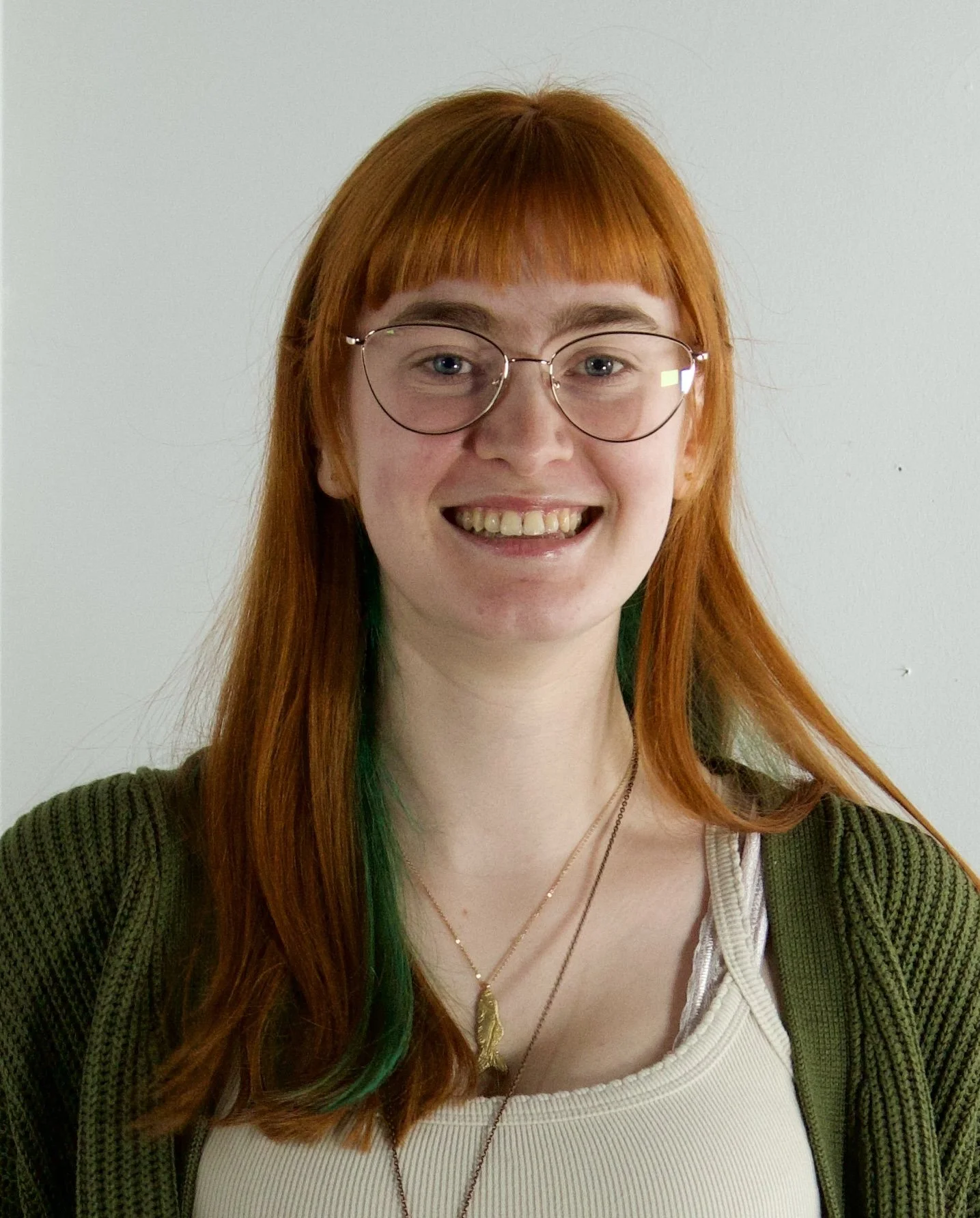
Hi, I’m Moira Fearnley
The natural world has its own voice. Observing it and listening can give you so much insight into how it works.
”What is [the serviceberries’] economic system? How do they respond to the issues of abundance and scarcity? […] Let’s ask the saskatoons. These ten foot trees are the producers in this economy. Using the free raw materials of light, water, and air, they transmute these gifts into leaves and flowers and fruits.[…]”
-Robin Wall Kimmerer, on The Serviceberry: An Economy of Abundance
Seeing the way that animals and plants interact with each other can mirror the way we live. Humans are animals, the same as any other you will find in the wilderness. I find it fascinating to take observed habits and behaviours of animals and relate them to people. I make artworks with snapshots of narrative that take these characteristics and put them in the context of our day to day lives. I also enjoy finding animals we have named after human-made stories like myths, and determining what aspect of their physical form or habits may have inspired us to do so. One of my works, Hercules Beetle (Dynastes hercules ecuatorianus) 2024, depicts said beetle, named for its immense strength, in a terrarium, fighting off a hydra (human hand) like Hercules does in his myths.
My interest in myths and stories also translates to my medium of choice, as we repeat stories over and over through time, maybe changing them slightly to fit our fancy. Printmaking allows for repetition as well, and is uniquely made for creating copies. My layering tends towards simplicity, using only lines, or line and one additional colour layer. I draw inspiration from Alberta based print artist Natalie Ley for the thicker lines and minimal layers I use.
My painting approach shifts broadly depending on the intent behind a piece, but one constant is my tendency to leave elements of my underpainting visible. In addition to the pleasing element It adds to a piece, I enjoy being able to see a little bit of an artwork’s beginnings shining through. I first came across this method in landscape painter Jim Musil’s artworks, and it can add luminosity or colour contrast in a piece.
When constructing a narrative for a work, I make sure to take the voice of the animal in mind. I observe or research it’s behaviours, place in its ecosystem, traits, and connections to stories other people have already tied to it. I am not just dropping an animal into an artwork, I am constructing an artwork around the animal.
We are animals. No matter how much we develop our societies away from nature, that will always remain the case. I use my art to celebrate the meeting point between ourselves and the natural world. To show the personalities that can be found in non-human animals, so that people can see themselves in the creatures around them and recognize their own wild nature too.
My Approach
Defining my practice gives me a helpful guideline for making and understanding my art. That being said, I try to keep myself open to exploring other mediums, subjects and processes in order to keep things fresh and to truly enjoy art making. To avoid trapping myself in a rabbit hole within my practice I keep two main goals in mind.
Process
The creation process is just as important to me as the end result.
Having fun
Allowing myself to create art that veers outside of my main practice, as long as it sparks joy. There is no need to make strict rules.